
For much of his career, Shripati Acharya has been drawn to entrepreneurs determined to change how things work.

“Entrepreneurship is something I was always very passionate about,” he says. “It gave me a vehicle to work with a lot of very sharp, committed and missionary people who are trying to transform the landscape through technology. That seemed like the right fit for my interests and perhaps my competence.”
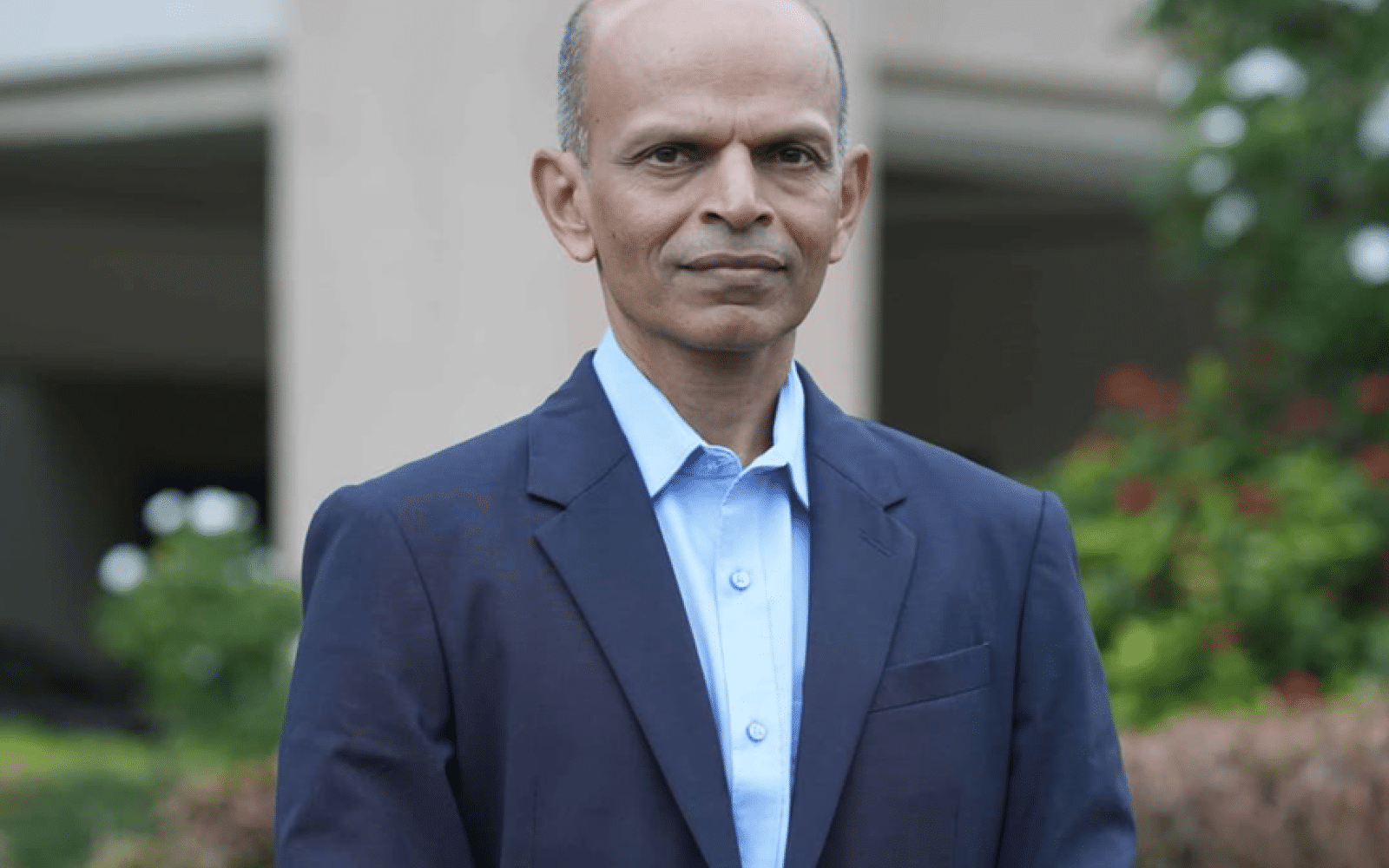
For more than a decade, that passion shaped his career. After studying engineering at the Indian Institute of Technology Madras and completing graduate studies at Stanford and Harvard Business School, Shripati built his career in technology and venture capital. He co-founded the photo-sharing company Snapfish, later acquired by HP, and went on to help build Prime Venture Partners, a firm supporting technology entrepreneurs in India.

Working closely with founders became the central thread of his professional life. But over time, his curiosity began to extend beyond the venture capital ecosystem.

“I was interested in looking at the nonprofit side as well,” he recalls, “trying to understand how I could contribute in the most effective fashion.”

Discovering social entrepreneurs

When Shripati became involved with the Ashoka Support Network (ASN), he encountered a different kind of entrepreneur, one that felt both familiar and deeply challenging.

Ashoka Fellows, he realised, share many of the same qualities he admired in venture backed founders: determination, creativity, and a long-term commitment to solving meaningful problems.

“These are very smart people,” he says. “They could choose to do many other things with their time. But they choose this.”

What stood out most was the individuals and the scope of their ambition.

“What I look forward to in these conversations is getting exposed to the range of work being done by social enterprises, and the kind of transformation that is possible.”

At the same time, Shripati began to engage more deeply with Ashoka’s focus on systemic change.

“In my readings and conversations, I came to believe that without state involvement, any meaningful or large scale change is not possible,” he says. “That does not mean small initiatives are not significant, they absolutely are. But to scale, working cooperatively with the state can yield large long term results.”

Finding the right role

As he explored the sector, Shripati also reflected on where he could add the most value.

“I enjoy thinking abstractly. I enjoy working with entrepreneurs, and I am comfortable with ambiguous and somewhat complex situations,” he says.

These qualities, shaped through years in venture capital, became a natural bridge into the social sector.

“Maybe this is something I could use as a wedge to get involved in the nonprofit sector.”

Over time, his experience with Ashoka Fellows helped confirm that intuition.

“I have more confidence now than when I started that this is a way someone like me can meaningfully contribute,” he says.

From advice to tangible impact

One of the entrepreneurs Shripati has worked closely with is Jessica Mayberry, Ashoka Fellow and founder of Video Volunteers, an organisation that supports community journalists and strengthens the right to voice as a cornerstone of inclusive democracy.

Their collaboration has focused on one of the most complex challenges social entrepreneurs face: building sustainable financial models.

“Fundraising is the last thing anyone wants to talk about,” Jessica says. “But he said, we need to talk about money and where the money is going to come from.”

By bringing a venture capital perspective, Shripati helped reframe fundraising not just as a necessity, but as a strategic lever for long term impact. He also supported the organisation through introductions to senior stakeholders and potential partners, expanding its network and visibility.

“He’s been generous with his contacts,” Jessica notes. “Shripati’s introduced us to quite a few high-level people.”

For Jessica, his contribution goes beyond connections.

“It’s really been wonderful, just how good he is as a systems thinker,” she says. “He comes prepared, he’s read everything.”

Learning through the work

For Shripati, the experience has also reshaped how he sees entrepreneurship itself.

Working with social enterprises has provided a closer view of organisations operating under constraints very different from traditional ventures.

“In a social enterprise, you need both passion and talent,” he explains. “Because you cannot throw money at the problem. The currency is the mission.”

This has deepened his appreciation of the complexity social entrepreneurs navigate, particularly in building teams and sustaining long term work with limited resources.

At the same time, the exchange goes both ways.

“One realisation is that people in the private sector can add value,” he says. “Many of the models we use to build and manage companies can be useful for social enterprises as well.”

A different lens on impact

Perhaps most significantly, his involvement with Ashoka has changed how he evaluates impact across all sectors.

“I find myself asking a different set of questions now,” he says, reflecting on how he assesses both startups and nonprofits.

Rather than focusing only on growth, he increasingly looks at whether an organisation is positioned to create systemic change.

This shift is not about choosing between for profit and nonprofit models, but understanding their complementary roles.

“There is a whole class of problems that are not suited to be solved by the traditional capitalist system, yet are extremely important,” he says. “You need both.”

For Shripati, the Ashoka Support Network represents more than an opportunity to give back. It is a space for mutual learning, where experience from venture capital can support social entrepreneurs, and where engagement with mission driven leaders sharpens how investors think.

“I have more confidence now that this is a meaningful way to contribute,” he reflects. “And I will probably be more enthused about continuing along this path.”

That insight may be the most powerful takeaway: working with social entrepreneurs does not only create social impact, it also transforms the people who support them.


** The Ashoka Support Network is a global community of committed leaders who share, support, and advocate for Ashoka’s Fellows, values and vision while unleashing their own potential as changemakers.