
After almost 15 years of founding and directing several successful technology and inclusive finance companies in India, Vineet Jawa recently decided to step back from the fast-paced corporate world and embrace a purpose-driven challenge: joining the social impact sector through the Ashoka Support Network (ASN). With a long-term goal of becoming a social entrepreneur himself to tackle problems related to men’s wellness and emotional well-being, Vineet is now channelling his expertise into the development sector.
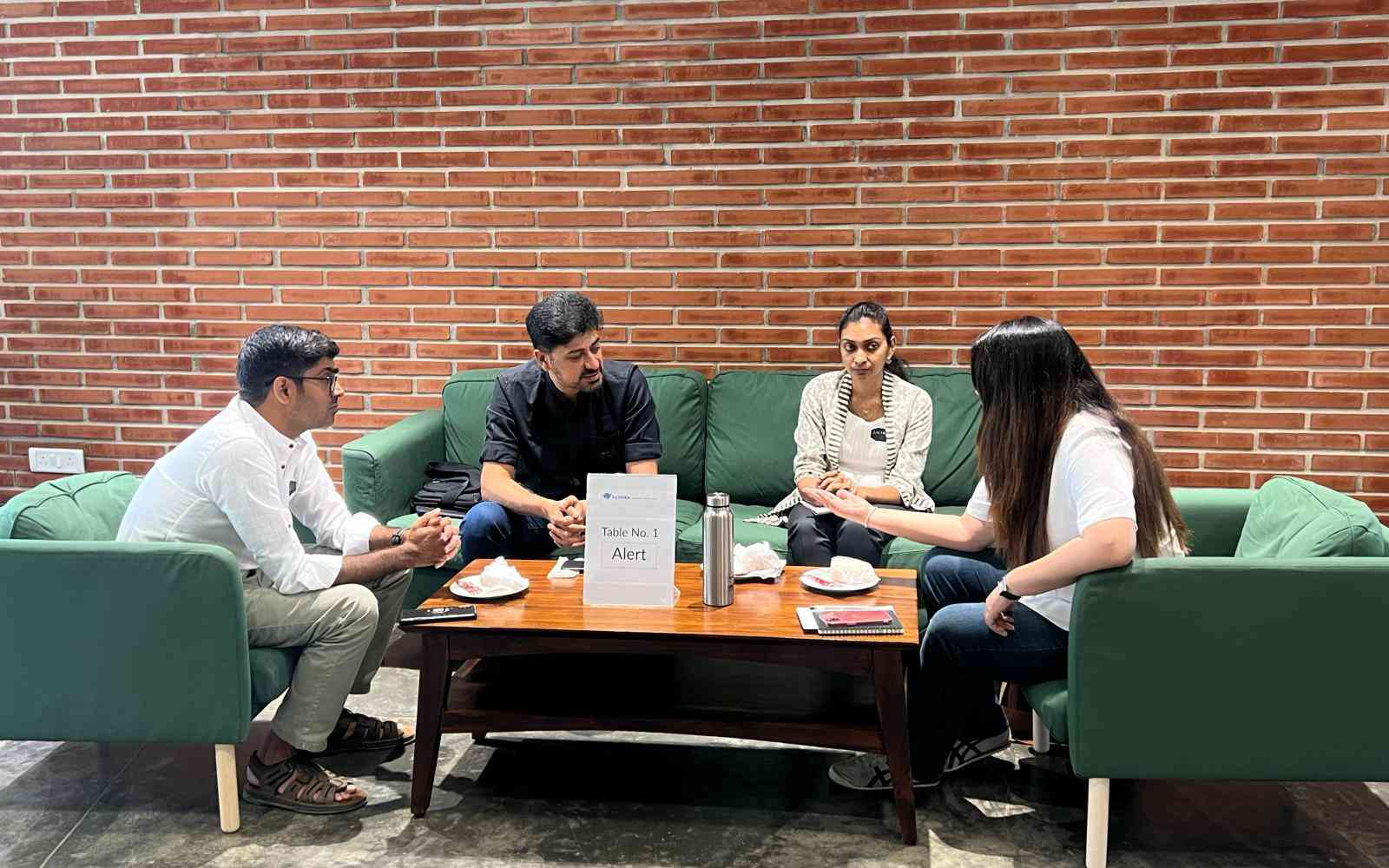
“After 14 years, I just felt I was ready for something new. I’ve given up my functional role in the companies I co-founded, and I've taken up impact work through Ashoka´s Support Network (ASN**). I’ve given myself a new mission. Part of that is a personal inquiry, and it's a deep one, in terms of how I shaped up to be the person I am and what it is that I want to be in the next half of my life. But already, I feel the pursuit of impact gives me more gratification, intrinsic satisfaction”, explains Vineet, co-founder of IDfy, a pioneering integrated identity company. 

I think this is what I was missing out on in my corporate life. You have to have some reason to get out of bed in the morning apart from making money. And I think this is what ASN sort of helps towards. It gives you very strong social causes that you can identify with and you can help influence in your own little way.”


Redefining success through impact scale

At the heart of Vineet’s new path lies a belief in achieving scale impact and system change, values that closely align with Ashoka’s vision. 

“Success for me in impact has to have scale. People do great work, you can be a one-to-one therapist, you could be a healer, you could even impact one person, and I respect that. But for me, in my DNA, I envision something which can be like a national movement or an international movement, right? It has to be at that kind of scale, which is also what resonates with me when it comes to Ashoka, that we're talking about systems change, a new way of working when it comes to these development issues.”

And so I'm also learning from the Ashoka fellows about how to work in the development sector. I see myself as one day picking up my own thread and going forward and making some impact at scale.”

His future plans include launching a not-for-profit focused on men’s mental health and emotional development, an area he believes is often overlooked.

“The space that I'm looking into and enquiring about is largely known as men's work, the well-being of boys and men. Statistically, male suicide is three or four times that of women and so are male homelessness, and males in prison. All these sort of statistics kind of indicate that men also have problems, right? I think women are the first to agree that men have problems, right? And so I think I'm looking at how to have a different approach to solve some of the men's problems, perhaps with a masculine lens”, highlights Vineet.


Bridging the technology gap in the social sector

One of the main differences that Vineet noticed between the corporate and the social sectors is the lag in technology adoption, which he estimates in some cases is up to seven years.

“My assessment is that most of these development sector nonprofits are at least five to seven years behind the commercial sector in terms of their tech capabilities. I feel the leadership teams in these places are not very tech-savvy, and they're also a little risk-averse when it comes to technology”, points out Vineet.

As the co-founder of CredRight, a fintech company that connects underserved borrowers to formal banking, Vineet understands how digital tools can unlock inclusion and scale.

“I believe technology plays a pivotal role in scaling impact, 100%. In India now, everybody has a phone, everybody has internet, they're consuming content and doing their transactions through digital payments. So, these development sector initiatives have to catch up with these people. I think they still have a long way to go to harness AI and the latest technology trends.” 

In his current role as an ASNer, Vineet also advises Fellows on hiring CTOs, selecting vendors, and building tech strategies, providing support that is both strategic and hands-on.


Learning about long-term commitment

Working closely with Ashoka Fellows has given Vineet deep insights into the inner workings of high-impact social organisations, from governance and metrics to fundraising and donor engagement.

“The calibre of the Ashoka Fellows, social entrepreneurs, is the best in the country. So, if you want to work with the top talent in the development sector, then the Ashoka fellows are definitely that people. I'm really impressed with their dedication, their long-term commitment, their drive for the cause. In the corporate world, we see people changing jobs every three years, but for these Ashoka Fellows and their senior leadership teams, you see them sticking on for 20 years or 30 years sometimes. And it's just that commitment, that drive, that sole focus, that attention that they give to their cause, is very commendable”, reflects Vineet. 

Getting a flavour of how donor agencies work, how philanthropies work, how companies' CSR works. I think that's also a technical skill that I'm building for myself. Those are some of the changes that I've seen in myself in the last year.”


A new leadership mindset

One of things Vineet has learned about in his transition into the social sector is the transformation of his own leadership style and mindset.

“I think I've gained more patience for doing things step by step and making sure that the organisation is moving along in synch. So that's definitely one thing that has changed in me”, says Vineet.

Less than a year into his journey as an ASNer, Vineet appreciates the flexibility and openness of the program.

“What you give and get out of ASN is really up to you. Ashoka is not going to dictate what to do. It's more of what you want to make out of it. And so I think it's a fantastic flexibility for people who want to contribute towards social causes in a very convenient format and a very friendly format. And the Ashoka team is always welcoming, always smiling, always helpful. So it's a great environment to get involved.”

From building startups to being inspired by system change and scale impact, Vineet´s journey showcases the evolving role of entrepreneurs in the 21st century who, beyond creating value, also aim to create social good.


** The Ashoka Support Network is a global community of committed leaders who share, support, and advocate for Ashoka’s Fellows, values and vision while unleashing their own potential as changemakers.